Search for anything by typing
Search for anything by typing
What kind of life could you build – if the world had already decided your future for you?
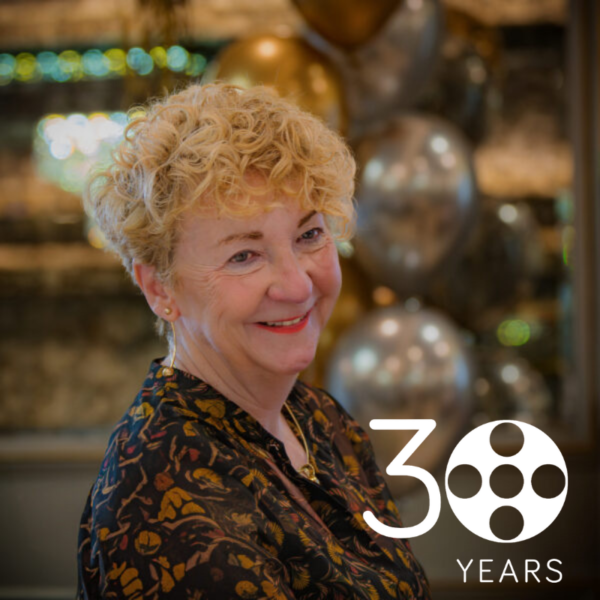 For so many people with a learning disability, autism or acquired brain injury, the answer used to be heartbreakingly limited. A place in a group home. A seat at a day centre. Maybe a hospital bed. A life built around other people’s decisions – not your own.
That was the reality I wanted to change when, thirty years ago, I helped start Positive Futures. As we mark our 30th anniversary, I’ve been thinking about where it all began, the progress we’ve made, and the work that still lies ahead.
The Gap in the System
When I was a young social worker, my first job was in a secure juvenile justice unit. I met teenagers with a learning disability who had committed offences – but it was painfully clear to me that they were victims too.
Some didn’t even really understand what they’d done. What struck me most wasn’t just their behaviour, but the lack of understanding that they had experienced in their young lives.
Later, working with Barnardo’s, I saw another kind of gap. Young people with a learning disability whose choices for adulthood were largely living in a residential or nursing home or a specialist hospital. I remember thinking, If this were my child at 18, would I accept that? Of course not. And if it wasn’t good enough for my family, it wasn’t good enough for anyone else’s either.
That’s where Positive Futures began – with that question. What if we built something better? Something human, dignified, and real?
A New Approach
When I co-founded Positive Futures in 1995, social care in Northern Ireland were still rooted in institutional thinking. The system was in slow transition — from long-stay hospitals and group homes towards community-based living — but choice and autonomy were far from guaranteed.
Support was largely professional-led and diagnosis-driven, with autism often lumped under “mental handicap” or “learning disability.” Person-centred planning was rare, and services were allocated based on perceived risk and available resources, not the aspirations of the individual.
There were still assumptions that the only way to support people was in groups and – in order to be financially viable – these had to be large groups. I remember being told I needed to get my head out of the clouds when I said people could live in ordinary houses. People were told they couldn’t. But I didn’t believe that.
We were also told that we shouldn’t ask families what they wanted, because it would be impossible to meet their needs and aspirations. But what we discovered was that families ask for so little. They just wanted an ordinary life for their loved ones.
From the very beginning, I built Positive Futures in deep partnership with families. They were the heartbeat. They helped design what we were building. They held us to our values.
We started with a small group of people in Bangor, County Down, offering something radically different: the idea that people with a learning disability, autism or acquired brain injury could live in ordinary houses, be tenants, be part of their communities, and make their own choices.
This was long before self-directed support, personal budgets or direct payments were standard. But we were already working in a way that reflected those future models — building support around the individual, rather than placing an individual into a service which had a “void”.
Person-Centred Support: Not a Buzzword, A Promise
“Person-centred” is a term that gets used a lot in social care — sometimes so much that it loses its meaning. But at Positive Futures, it has always been at the heart of our values. For us, it’s a promise: to really listen. To design support around what matters to each person. And to recognise that being different doesn’t mean needing less.
I often explain it this way: I’m registered blind, and if I received support which didn’t take account of my blindness, it would simply not work.
Being person-centred means asking the right questions: What does a good day look like for you? Who do you want in your life? Where do you want to live, and how? From the way someone eats their breakfast to how they spend their weekends, every detail matters, because every detail is part of a life.
You can see this commitment across all our services. In Supported Living, people can live where and how they choose. In our Family Support Services, we respond flexibly to the needs of the whole family. We don’t ask people to fit into our services – we build our services and supports around them.
Rooted in Relationship
An approach which we introduced to Northern Ireland over 30 years ago and something that I am really proud of is our Families Matter Shared Lives service. It gives adults with a learning disability, autism or acquired brain injury the chance to be supported by another family or individual — someone with time to give, and often, space in their home. That support might be long-term, overnight, or during the day. But what makes it special is the relationships it creates.
One story that stays with me is of a Shared Lives carer who has offered a home to a young person for the past 42 years. That young person has grown up, matured, and lives as part of that family — with the kind of consistency, love and belonging that just wouldn’t have been possible in many traditional settings. He hasn’t moved through services. He has stayed in one place, surrounded by people who truly know and love him.
For me, Shared Lives reflects our fundamental belief: that real support is built on connection, trust and consistency. When those things are in place, people don’t just receive support – they experience stability and belonging in a life where they have choice and control.
Ordinary People, Extraordinary Work
Central to everything we’ve achieved are the people who choose to work at Positive Futures. From the beginning, we’ve looked for people with heart — those who bring compassion, values, and a willingness to listen. Qualifications matter, of course, but they’re not where we start. What matters most is how someone shows up for others.
We want people who understand that doing with is not the same as doing for. People who take real pleasure in seeing others achieve. That approach has shaped a culture where our team members don’t just join us – they grow with us.
Many of our leaders began their journeys in support roles. Our Director of Operations for the Republic of Ireland started as a Support Worker. So did our newest Operations Manager in Northern Ireland Another colleague joined as a Relief Support Worker and now helps shape our people strategy from within HR. We invest in people because we believe in them.
Leadership, to me, means being present. I’ve always believed in staying close to the people we support and the staff who make that support possible. I make it a priority to know our teams, the people we support and their families. That’s how I lead – by staying connected, listening, and making sure every person feels seen, heard and valued.
A Lifeline for Families
At Positive Futures, we’ve always understood that where there is someone with a disability in a family, the whole family needs support. That’s why we developed our Family Support Services. These services not only work directly with the child or young person, building their skills and confidence, but they also provide support to brothers, sisters, mums and dads, so as to build the resilience and confidence of the whole family and to give them a much-needed break.
We also provide residential short breaks at our Wheatfield Short Break service creates space for individuals to relax, build confidence, and enjoy new experiences in a safe, familiar environment. And it gives families something just as important — time to rest, to mark milestones, or recharge their batteries, knowing their loved one is in trusted hands.
It is designed to feel like a home from home — not clinical or institutional, but warm, welcoming and real.
Changing the System, One Step at a Time
At Positive Futures, we’ve always been focused on evolving our work to meet real needs. Over the years, that’s meant introducing new approaches — like our Shared Lives service, or developing a futures planning project to support older carers. We never believed in simply maintaining services; we’ve always asked what’s missing, and how we can fill that gap.
One of the clearest examples of how listening has shaped our work came from a conversation with a father. He told me he prayed every night that his daughter would die before him — because he was afraid of what would happen to her without him there. That level of fear and uncertainty is something no family should face alone. So we acted. We created a futures planning project – Better Futures – to help families think ahead, make arrangements, and find peace of mind. That’s how we’ve always worked: by listening closely, and building what people truly need.
A major milestone came when we expanded into the Republic of Ireland over a decade ago. I remember wondering whether what we had built could really be replicated — or whether it had been a one-off. But when I saw how naturally our values carried across, I felt deeply reassured. The way we work resonated just as strongly, and that’s something I still find incredibly exciting as our journey in the Republic continues to grow.
A Mission That Endures
As I look ahead, I know the work of Positive Futures is far from finished. And that’s exactly as it should be. Real change takes time — and the needs of the people we support continue to evolve. So we must evolve too.
One of the biggest changes I still hope to see — not just in our work, but across the whole sector — is a real shift toward prevention and early intervention. Too often, the system barrels forward into crisis after crisis, funding only what’s already broken. But I’ve always believed that if we get in early, we can help families stay together. We can stop things falling apart.
I’ve never met a family who wanted to put their child into care. That family doesn’t exist. What they want is help — early, practical, human help. And I believe that’s where we can make the most meaningful difference.
Above all, we need to keep listening — really listening — to the people we support and their families. They are the ones living these experiences every day. When we design support around their lives, their choices, and their hopes, everything changes. That’s how we create something meaningful.
We support other people’s sons and daughters. What a responsibility that is — but what a privilege.
A ‘FIRST’ FOR POSITIVE FUTURES STUDENT PLACEMENT WITH OUR MO SHÁOL SERVICE
Adenike Adeyanju, a Social Work student with University College Dublin (UCD), recently completed a successful 14-week placement with our Mo Sháol Service. This was the final placement for her degree, and she will graduate in August.
Adenike is the first Social Work student to complete a placement with us in the Republic of Ireland. Both Adenike and her course coordinator in UCD gave us excellent feedback about her time with our Mo Sháol Service. Service Manager, John Mahon, who supervised Adenike’s placement, was singled out for being so supportive and going ‘above and beyond’ to ensure that Adenike gained valuable experience.
Our Mo Sháol Team celebrated the successful completion of Adenike’s placement with coffee and buns. Adenike was delighted when the team presented her with a beautiful orchid.
We wish Adenike the best of luck in her future endeavours.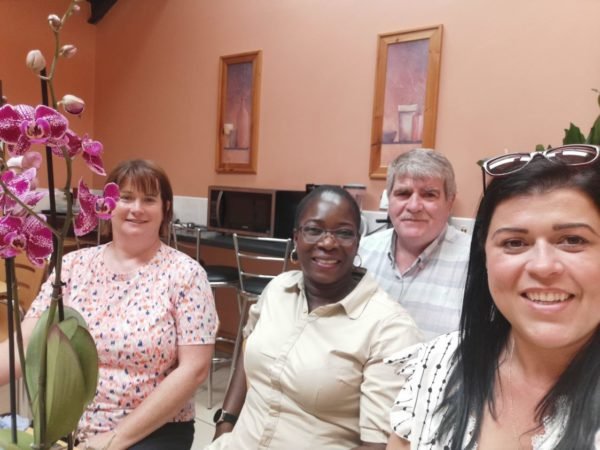
TRIBUTES AS FOUNDING MEMBER OF BOARD OF TRUSTEES DIES SUDDENLY
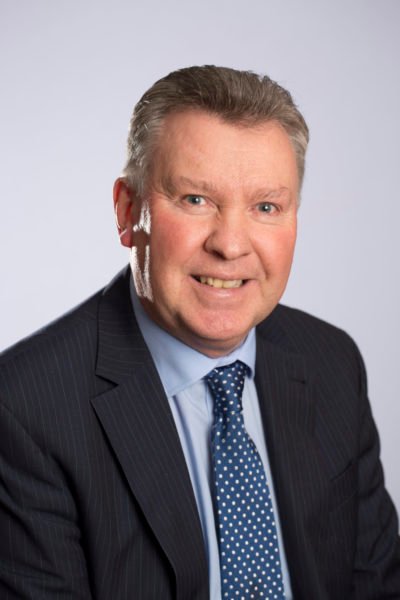 Everyone at Positive Futures was shocked and saddened to learn of the sudden death of Larry Broderick, one of our Trustees in the Republic of Ireland and former General Secretary of the Irish Bank Officials’ Association.
Agnes Lunny, Positive Futures’ Chief Executive, said: “Larry was one of the founding members of our Board of Trustees in the Republic and was passionate about our work. He was very engaging and positive, and his wise counsel will be sorely missed. We send our heartfelt condolences to his wife Elizabeth and daughter Lauren.”
Larry Broderick was General Secretary of the IBOA (later the Financial Services Union) from 2001 until his retirement in 2018.
Irish News columnist Tom Kelly described him as “a staunch trade unionist, a passionate man, a strategic thinker and unbelievable craic.
“He was an infectious man … but also one of the one most articulate figures in the Irish trade union movement.”
The FSU General Secretary, John O’Connell, described him as “a trade union leader, a gentleman and a friend to many.”
Tributes to Larry Broderick came from across the political spectrum and included Finance Minister Michael McGrath.
Agnes went on to say: “Larry’s concluding remarks at the Board last Friday, was to restate his pride in the work of the organisation and the fact that he was so excited that Positive Futures had agreed to bringing its innovative approach more children and families across Ireland. He will be sorely missed by all of us, but his words of pride and wisdom are his legacy to our organisation.”
WARM WELCOME PUTS MEATH ON CHARITY MAP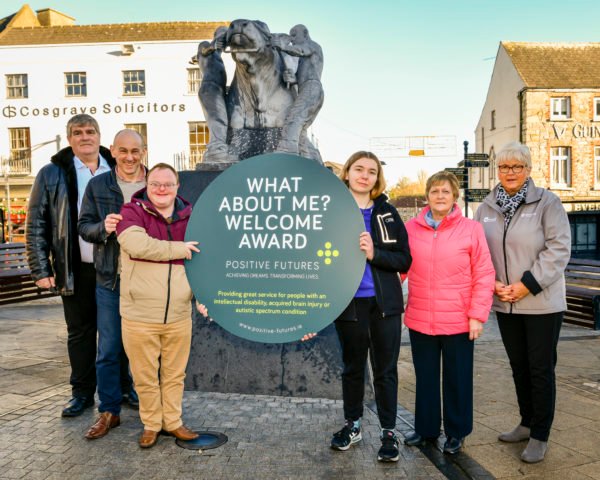
Three Navan businesses are the first recipients of a charity award that recognises excellence in welcoming people with an intellectual disability.
The Welcome Award is presented by Positive Futures and is designed to highlight the efforts of businesses or organisations that go the extra mile in treating people equally.
Essentials Café, Chekhov’s Café and Arc Cinema were nominated by Positive Futures’ Mo Shaol service, which operates a network of HomeShare and Short Break Hosts, who welcome people into their lives to provide respite support to families who need it.
John Mahon, Acting Service Manager with Mo Shaol, said: “A warm welcome makes a huge difference to the children and adults we support. It shows them that they are equal and valued members of the community. We’re delighted to present the first three businesses with our Welcome Award. We’re also delighted that Meath is the first county to be recognised in this way.”
Positive Futures has operated the Welcome Award in Northern Ireland for several years. Previous recipients include the BBC and Belfast International Airport. The award entitles recipients to display a large window sticker showing people that they can expect a warm welcome.
Dr Agnes Lunny, Chief Executive of Positive Futures, said: “We believe it’s really important to reward organisations for inclusion, compassion and understanding, and these three Navan businesses certainly live up to those ideals. We hope many more businesses and organisations will join the Welcome Award club in the near future.”
Paula McCaul, CEO of County Meath Chamber, said: “We are delighted to support this worthwhile initiative.”
To be eligible for the award, businesses need to be nominated (usually by a person with an intellectual disability, autistic spectrum condition or acquired brain injury, their family or carer, or their Positive Futures support staff). Find out more at positive-futures.ie/about-us/what-about-me-welcome-award/
JUST THE JOB FOR ORLAITH
Posted: 2 December 2022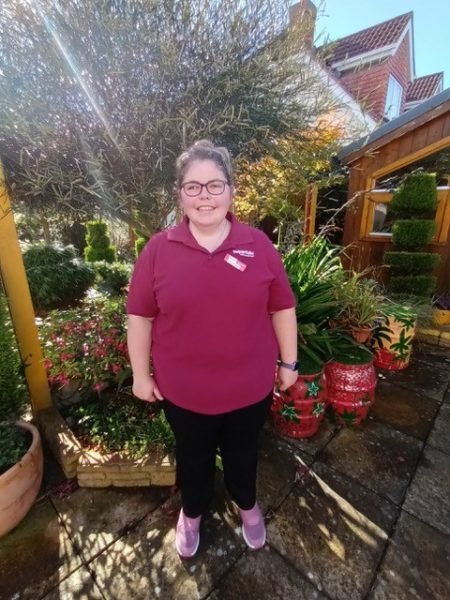
As the UN publicises its International Day of People with Disabilities, we’d like to share the story of Orlaith Jackson.
The UN event – on Dec 3 – is highlighting people’s access to work and the people who support them to find a job.
Orlaith, who’s 28, has recently started work with SuperValu near our NAHVI service in Dublin and is enjoying it very much. She originally had 12 weeks of work experience, but the supermarket had no jobs to offer at the end of it. However, they soon called her and offered a contract until the end of January 2023.
“I work Monday and Wednesday from 9am until 1pm,” says Orlaith. “I’ve had excellent support from SuperValu. If there’s something I’m not sure of, my colleagues are very helpful. I love it because I meet people and I’m making new friends.
“Having a job is important to me. I did a course in preparation for working in the retail industry, and it’s great to be able to put it into practice.”
Larry Morris, who supports Orlaith, said: “Orlaith, being the person she is, got on well at work from day one. She’s very sociable and is a great communicator. She’s perfect for the job because of her outgoing personality and social skills.”
NAHVI, in Donabate, was established in 2001 as a housing and support service for people with visual impairment and an intellectual disability. It currently supports 16 adults.
Positive Futures has provided governance and management oversight to NAHVI since 2018, with the service formally transferring to Positive Futures in August 2022. Dr Agnes Lunny, Chief Executive of Positive Futures, said: “Orlaith’s story is one of the many successes of the people supported by NAHVI. It’s been wonderful to witness people graduating from college, getting jobs, and making other personal achievements that have enabled them to play a full role in society.”
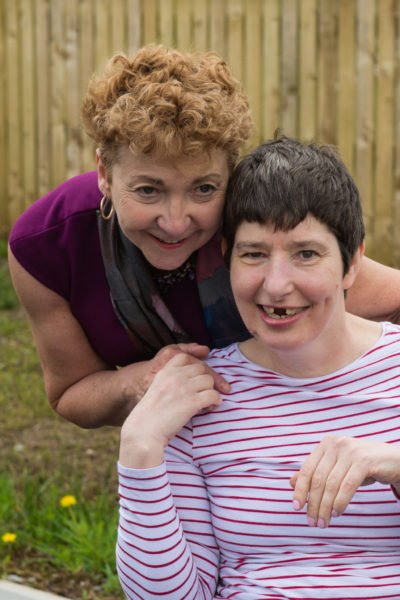
Dundalk is the location for our latest Supported Living Service.
The Dundalk Supported Living Service will enable people to live more independent lives in their own homes with support from a dedicated and skilled team.
Our Mo Shaol service, which is well established in Louth and Meath, already provides short breaks for children and adults with autism and/or an intellectual disability with host families, to give carers some respite from their caring responsibilities.
Tim McGeown, who’s originally from Dundalk and is returning to his home town to manage the Supported Living Service, said: “We’ll be supporting one person initially, but hope to expand quickly. We’re already recruiting for one Senior Support worker and a number of Support Worker positions. Positive Futures’ mission is to transform lives and enable the people we support to achieve their dreams. We don’t do ‘one size fits all.’ Our service is tailored to each person’s individual needs, likes and dislikes.
“Kieran, a 40-year-old man we’ve supported in Co Meath since 2019, says kindness, good communication and trustworthiness are the hallmarks he looks out for in a Support Worker – as well as the ability to keep up with his many interests in life!”
Kerry Mallon, Positive Futures’ Operations Manager, said: “A great thing about Positive Futures is that everyone knows and takes pride in the achievements of the people we support. Even when I visit our head office, the people there know all the people we support.”
Megan Harmon, who is a Deputy Service Manager, joined Positive Futures in 2019 as a Support Worker. She said: “As a Support Worker, I discovered that no two days in Positive Futures were the same, because the people we support are in control of their own lives. One day I might be supporting someone toward further education, another I might be planning to support another person to plan their holiday abroad. We work with people to set their own personal goals and then help them develop plans to achieve these. I learn every single day from the people we support, and I’m delighted to be playing a key role in this organisation. When I first joined Positive Futures, I heard the phrase ‘we grow our own’ and it’s stayed with me to this day. There are so many opportunities for the right people to progress and I have always found Positive Futures to be a really supportive organisation.”
Details of jobs with Positive Futures and a link to an application form can be found at positive-futures.ie/jobs-2.
A chance conversation led Lisa McAuley from the Dundalk are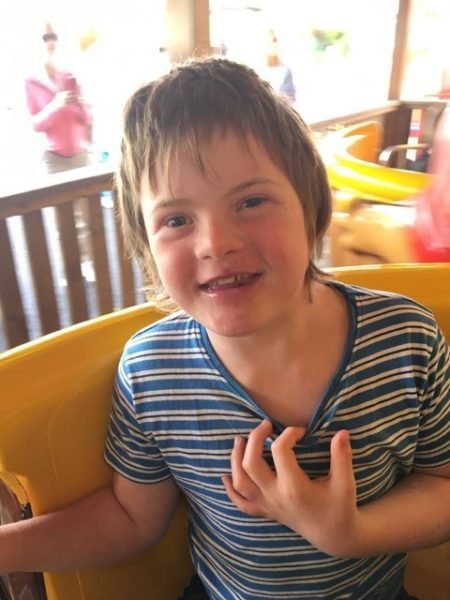 a to welcome a young girl with Down’s Syndrome into her life and embark on a rewarding new adventure.
“I was just casually chatting with a friend one day when she mentioned that she was involved in a service called Mo Shaol, which offered support to families that had children or adults with an intellectual disability,” says Lisa. “She put me in touch with the service manager and soon after that, Zara, who’s now 5, came into our lives. I’d encourage everyone who has maybe thought of doing something like this to give it a go.”
Mo Shaol is run by Positive Futures, which supports people with an intellectual disability, acquired brain injury or autistic spectrum condition, in partnership with HSE Disability Services in Louth and Meath. Mo Shaol operates a network of HomeShare and Short Break Hosts, who provide short break (respite) support for families who need it.
Hosts can offer support in their own homes – or even just a regular day out in the community. Anyone who comes forward simply outlines their availability, and the Mo Shaol staff will carefully match them with the appropriate person who needs support.
Zara’s father, Cathal, says: “Zara gets one to one attention from Lisa which is sometimes hard in a busy family home like mine. She has a friend outside of her immediate family which is really important. She gets to spend some time away from her siblings, which is great too for her as it helps her to develop skills like socialising skills.
“Mo Shaol has changed Zara’s life. As her father, I can see the happiness in her when she knows she is going to spend time with Lisa. She waits at the window watching out for her and jumps up and down with excitement as she looks forward to it so much.
“It’s great for me, too, because it gives me a break.”
Kirsty Cooke, Manager of the Mo Shaol service, says: “Our HomeShare Hosts are extra-ordinary, ordinary people from all walks of life who have time in their lives and, where required, space in their homes to offer support. That support can be everything from a permanent arrangement to a short break or days out.
“We have so many stories of how people’s lives have been transformed by what we do. It doesn’t just change the life of the person being supported, but the life of the host, too. All our hosts find it hugely rewarding. To be a host, you don’t have to have a family of your own. You can just be someone with the time and space to make a difference.
“Every HomeShare arrangement is unique, depending on people’s individual needs and what the host can offer. To be referred to us, the adult or child must be under the care of the HSE Disability team in Louth or Meath. The HSE decides the amount of support. Hosts are assessed by a HomeShare Social Worker and also need Garda clearance and a Tusla check. We provide excellent training, guidance and ongoing support, which is updated throughout a host’s time with the service.”
Lisa says of being a host: “Depending on the needs and interests of the person you’re supporting, a typical day might involve going to the park, doing some arts and crafts or even just watching a favourite movie. Knowing that you’re offering support to a family that needs it is hugely rewarding. I believe life is better when you’re giving, which is why I got involved. Because my husband and I both work in Health & Social Care, we know first-hand how great the need is.”
Donna McGuinness supports Eamon (10), who has Down’s Syndrome and is non-verbal.
“As a family, we get great joy from spending time with Eamon,” she says. “We have two boys at home, and they love to organise some new experiences we can do with him each week. Eamon also loves our two dogs and is comfortable to come and visit us any time.”
But as Eamon’s mum, Laura, explains, his story used to be very different. Until he was nine years old, he had not slept a single night through and there was no support on offer.
“I had no-one to take Eamon other than my parents, who were getting on in years,” Laura says. “They are so good to him, but I was keen to establish another social support. It was suggested that we try this new service called Mo Shaol. They offered to find a host family or help me to find someone. Donna was Eamon’s pre-school teacher and was absolutely fantastic with him at the time. When she said yes, I was in tears of gratitude.
“For the first time, Eamon has friends and a social life outside his own family. The best thing about Mo Shaol is knowing that he has another layer of support in this world and if anything were to happen there is someone who would care for him. The staff at Mo Shaol are a great support, too.”
Mo Shaol always needs new HomeShare Hosts. A financial allowance is available and full training and support are provided. To find out more, contact Kirsty Cooke, Service Manager, on 042 942 8078 or email [email protected].
SHARON’S A WINNER!
Our Saol Beo service in Manorhamilton, Co Leitrim, now boasts a Special Olympics medal winner.
Sharon, one of the three people supported at Saol Beo, picked up two medals at the event in June 2018 and is rightly proud of her achievement.
Support worker Ciara registered as a Special Olympics Ireland volunteer to enable her to support Sharon to compete. They first attended training in Swinford, Co Mayo, where Sharon showed a great sense of pride and determination. Then it was on to the launch event in Athlone.
As the big day approached, complete with Special Olympics Ireland tracksuit and accommodation booked in a hotel of her own choosing, Sharon made her way to Dublin. On arrival, she was able to do some shopping and meet other people taking part in the Special Olympics.
Staff at the event complimented her on her determination and effort as she took part in 10 Pin Bowling and the Wheelchair Push. She was thrilled to come away with two medals, which now enjoy pride of place – together with her Special Olympics badge – on her Wall of Fame at home.
She often chats about her time at the Olympics and the day Positive Futures helped her achieve one of her hopes and dreams.
Sharon is pictured with our Chief Executive, Agnes Lunny.
AISLING IS AN INSPIRATION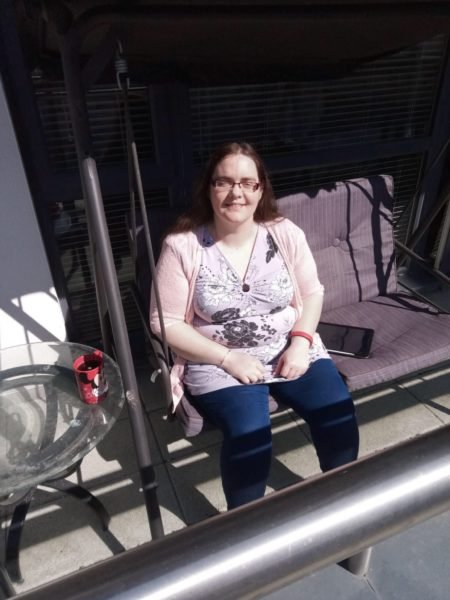
From our Greater Dublin Service, a reminder that we’re all here to support each other, and that support can work both ways.
Senior Support Worker Megan Harman celebrated her birthday recently. After asking some pertinent questions about the date and about her favourite kind of cake, Aisling, who’s supported by the service, secretly ordered Megan a chocolate caterpillar cake in her online shopping and presented it on the day. She also sang Happy Birthday. It wasn’t Aisling’s only good turn. When she discovered that Carol, the Deputy Service Manager, had tested positive for coronavirus, she sent her a text wishing her well and saying she was looking forward to seeing her when she was feeling better.
Niamh Tormey, Service Manager, said: “Aisling is always thinking of others and goes out of her way to let people know that she cares about them. We’re all inspired by her and the fact that she is so happy with her support team makes me incredibly proud.
“We are very much looking forward to things getting back to normal and to helping Aisling progress her goals. One of them is to complete a college course we had applied for in February and which she was due to start before the coronavirus emergency struck.”
STEPPING UP TO THE CHALLENGES
The pandemic emergency has had a huge impact on the way Positive Futures operates.

It has affected not just the people we support and their families, but also our staff and their families.
Fran Murphy, our Operations Director for the Republic of Ireland, said: “We are continuing to support people in our multiple sites of operation across Ireland. In some cases, where we cannot have face-to-face contact with the people we support, we are offering support by phone and video call and this has proven very successful.
“Our staff and the people we support have also had to get used to equipment that is not familiar, such as masks and other personal protection equipment. At all times, of course, we have been guided by the government directives and have been closely monitoring and addressing potential Covid-19 health issues.
“It takes a lot of hard work and collaboration to make it all come together. Keeping everyone safe and well is a challenging task but working together is what Positive Futures does best.”
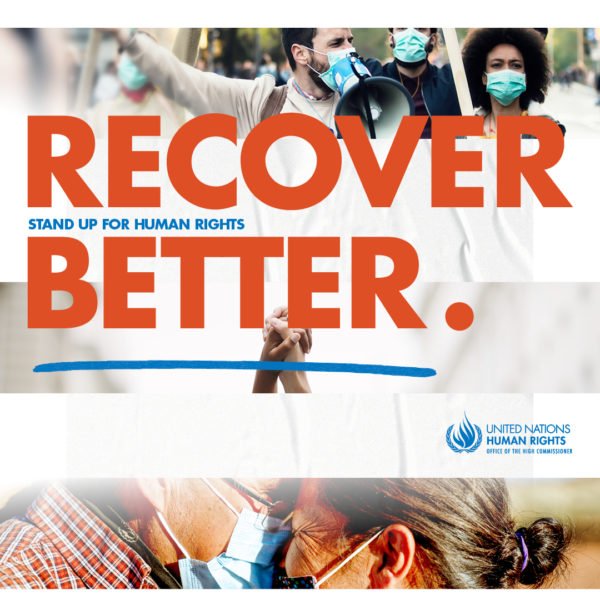
As we celebrate World Human Rights Day 2020, it’s worth remembering that human rights are not a remote issue in some faraway authoritarian country.
Some of the most shocking human rights abuses are taking place right here and right now, in places of “care” where people with a learning disability should be entitled to safety and support. It has happened time and again in institutions across the UK and Ireland.
That’s why Positive Futures is supporting this year’s theme of Human Rights Day: “Recover Better – Stand Up for Human Rights.”
When the planet recovers from the coronavirus crisis, we want the voices of people with a learning disability to be heard in rebuilding the post-Covid world.
Jackie (an Advocate, supported by Positive Futures) had this to say about Human Rights Day 2020: “As we have heard in the news, the abuse of people with a learning disability is too common and people with a disability can be the forgotten victims of abuse. But it does not have to be this way. People with a disability have a voice that must be heard when working for their human rights.
“I believe that people with a learning disability must be seen as leaders and be able to share their voice and opinions. There should be nothing about us without us.
“It is vital that we speak up now to make sure that we “build back better” to create a fairer society for everyone as we recover from the impact of Covid-19. There is still more work to be done as we work towards human rights for all, but people with a learning disability must be involved in leading the way.”
As Eleanor Roosevelt once said, human rights begin “in small places, close to home – so close and so small that they cannot be seen on any maps of the world. Yet they are the world of the individual person […] Unless these rights have meaning there, they have little meaning anywhere.”
COMMUNITY SPIRIT BLOOMS BEAUTIFULLY IN MANORHAMILTON
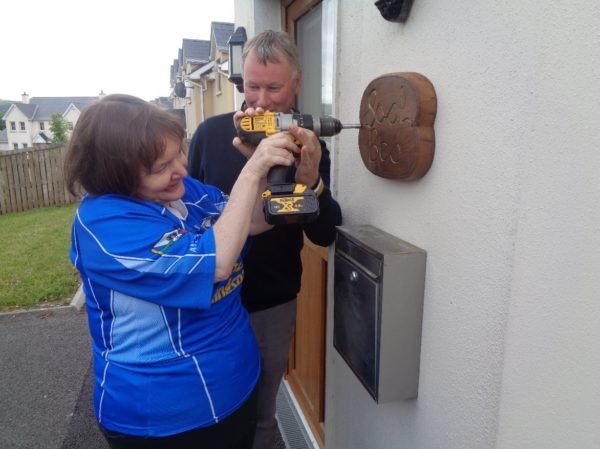
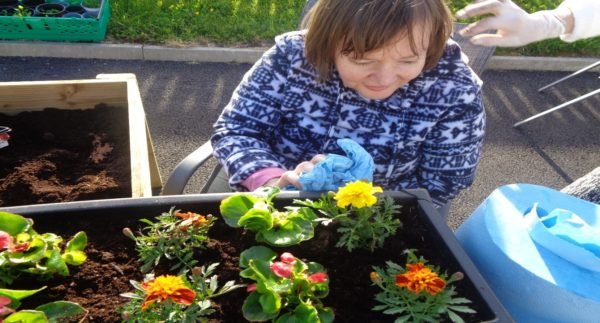 The women we support in Manorhamilton, are digging in for a busy summer on the horticultural front after a lovely gesture by the North Leitrim Men’s Group.
The group delivered and installed a raised flower bed which they had made themselves. Since it arrived, we have received donations of plants to keep everyone busy and active as some coronavirus restrictions continue. After weeks of lockdown, it is just what people needed to promote positive mental health.
Our Chief Executive, Agnes Lunny, said: “We are very grateful to the group for thinking of the people we support, and for the time and effort they put into making the flower bed. Everyone is delighted. It’s even the ideal height for Sharon, one of the women who uses a wheelchair. It’s wonderful to see Positive Futures and the people it supports becoming a valued part of the community in Manorhamilton.”
Since the donation of the flower bed, the NLMG have also produced a beautifully carved name plaque for their house.
A BIG THANK YOU FOR COMMUNITY SUPPORT
Our Saol Beo Service in Manorhamilton has benefited from the generosity of the local community.
A Vintage Car and Tractor Run in the town, organised by the South Donegal Vintage and Heritag e Club, raised an impressive €480 for our work. Staff Nurse Lorna Daly accepted the cheque on our behalf at an event in Ballyshannon. Other beneficiaries of the fundraising event were the North West Hospice and Arus Breffni Patients’ Comfort Fund.
Our thanks to everyone at the club for thinking of us.
Meanwhile, the Bee Park Community Centre in Manorhamilton has offered us the use of the centre for recreational and social activities – an offer which we’re delighted to take up.
It’s heartwarming that Saol Beo has become such an integral part of the community in such a relatively short time.
Our first Annual Consultation Exercise (ACE) among the  people we support and their families/carers has found a high level of satisfaction with the services we provide, but highlights some areas for improvement.
People’s views were sought through questionnaires, peer-led interviews and a focus group.
The first of the six questions we asked was in relation to people’s happiness with the support provided by Positive Futures. There was a 100% approval rating from the people we support, while 93.75% of families/carers agreed.
The second was whether members of staff were well-matched with the people they support. Nine out of 10 of the people we support said yes, while the approval of families/carers was slightly lower at 84%.
In relation to whether staff always listened to what people wanted, 100% of people we support said yes, compared with 84% of families/carers.
Asked whether people felt safe with Positive Futures, 95% of the people we support said yes, while 100% of families/carers agreed.
In response to whether staff supported people to make their own choices, 95% of people we support said they did, compared with 93.75% of families/carers.
The final question, in relation to whether Positive Futures helped people to do the things they wanted in life, 90% of the people we support answered yes, while just over 84% of families / carers agreed.
Areas for improvement have been identified and will be addressed in an action plan. Some of these improvements, identified during initial feedback, are already under way. As a direct outcome of the ACE report, our top priorities are to:
The full ACE report, including direct quotes from people we support, can be read here. An easy read version can be found here.
THE ART OF LOCKDOWN
During this unprecedented time, it’s been an inspiration for us to see how the people we support, their families and our staff and their families have responded to the situation.
We’ve seen the unleashing of some wonderful creativity in the last few months , so we thought we’d set a challenge, for anyone who wants to get involved, to come up with a piece of art that represents ‘The spirit of Summer 2020’.
If you would like to take part in our arty competition all you have to do is come up with an original creation between now and the 19 June. Your entry is limited only by your imagination, it could be a painting, a video, a poem, a story, a piece of music, or performance, or something you build, or sculpt, or anything else you can think of.
To enter, simply post a picture, or recording, of your entry on our Facebook Page (PositivefuturesIE in ROI, PositiveFutures95 in NI) by midnight on the 19 June.
Entries to our competition will be judged by a panel of the people we support, chaired by Tara Dunne, Tuath Glas Service Manager. The 3 that are judged to best represent the ‘Spirit Of Summer 2020’ will be announced on Facebook on 26th June and will win one of 3 Summer Picnic Hampers kindly provided by TESCO.
We hope you have fun coming up with your entries.
Competition Rules
1. This competition is open to people supported by Positive Futures, their families, members of Positive Futures staff and their families
2. People may enter as a group as long as the names of the group members are listed when the entry is posted on Facebook
3. All entries must be posted on one of the Positive Futures Facebook pages before midnight on 19th June 2020, entries after this date cannot be accepted
4. The decision of the Judging Panel is final. No appeals will be heard.
5. Positive Futures is free to use the image/recording posted by each entrant in any way it deems fit in line with the mission and values of the organisation.
6. The 3 winners of the competition will be announced on 26 June 2020 through the Positive Futures Facebook Pages
7. Winners will receive their prize by mail after the close of the competition. No cash alternative is available.
